
East Bay Business Flooring: Polished Concrete or Epoxy - Which Works?


Quick Answer (TLDR):
The flooring that "works" depends entirely on what your East Bay business actually does. Polished concrete works for high-traffic retail, offices, and showrooms prioritizing modern aesthetics with lifetime durability. Coating systems work for commercial kitchens, chemical-exposed manufacturing, wet environments, and anywhere you need engineered performance. Light polishing or prep & seal handles many warehouse applications. Your operation tells you the answer - not marketing materials.
What "Works" Actually Means for Your East Bay Business
Here's the problem with most flooring advice for East Bay businesses: contractors tell you about their products, not about your operations.
I've been finishing floors across Fremont, Berkeley, Oakland, and the entire East Bay since 2014. Here's what I've learned: the flooring that "works" isn't the one with the best marketing or the coolest photos. It's the one that does what your business needs every single day without becoming a problem you're constantly managing.
Let's flip this conversation. Instead of explaining what polished concrete and epoxy are (you can Google that), let's talk about what actually happens in different East Bay businesses and which flooring system handles it.
First: Understanding What "Epoxy Flooring" Actually Means
Before we get into what works where, let's address something most contractors gloss over because confusion serves their interests: when people say "epoxy flooring," they're typically talking about professional coating systems in general - not exclusively epoxy chemistry.
It's like saying "truck" when you need to move something. You might need a pickup, box truck, flatbed, or semi depending on the job. "Epoxy flooring" became the catchall term, but the actual products vary significantly.
What you're getting is an engineered protective barrier - professional-grade materials creating a sealed layer between your operations and the concrete substrate. Rather than mechanically transforming the concrete like polishing does, you're building a performance-engineered surface over it.
The Coating Chemistry Breakdown
100% solids epoxy: The workhorse. Maximum durability, excellent adhesion, solid chemical resistance. "100% solids" means exactly what it sounds like - zero solvents evaporating, just pure material becoming your floor. Longer cure time than some alternatives, but you're getting every bit of thickness you paid for. This is the default choice for most East Bay commercial installations.
Variable solids formulations: Some coating products range from 40-80% solids content. Lower percentages aren't inherently inferior - sometimes they're precisely the right tool, providing specific flow characteristics or finish qualities that 100% solids can't achieve. It's about matching product to purpose.
Polyaspartic systems: The speedster. Faster cure times, superior UV stability (won't yellow like some epoxies), more temperature-flexible during application. Ideal for quick turnarounds or sun-exposed areas. If your East Bay facility needs the floor back immediately, this is frequently the answer.
Polyurethane systems: Enhanced chemical resistance, anti-microbial properties. Commonly deployed in food service or healthcare where "is this sanitary?" isn't theoretical - it's a legal mandate enforced by health inspectors.
Cementitious urethane: The tank. Extreme durability, better thermal shock resistance than standard coatings. Used in heavy-duty industrial applications and food processing plants where your floor takes relentless punishment.
The advantage of coating systems isn't that they're "better" than polished concrete - it's that we can engineer the precise solution for your specific operational demands. Need resistance to particular chemicals? We select products formulated for that exposure. Need it completed fast? We use rapid-cure systems. Operating in temperature extremes? There's coating chemistry designed for exactly that scenario.
The application process varies based on system selection and space requirements - could be straightforward clear coat application or complex multi-layer build depending on performance needs.
Here's what nobody mentions (probably because they're hoping you won't ask): a competent contractor selects coating products based on your operational requirements, not just what they're comfortable installing or what's currently in stock. The "epoxy flooring" you receive should actually be the right combination of products for your space, not just whatever's on sale at the supplier this week.
The trade-off: coating systems aren't lifetime floors the way polished concrete is. Even premium systems eventually need maintenance or recoating. Timeline varies dramatically - could be 5 years in the most abusive environments, could be 30 years in lighter-use applications. But in spaces requiring serious durability where polished concrete would chip, or where you need that seamless, waterproof surface that won't collect debris or stain, coatings aren't just an option - they're the only rational choice.

When Polished Concrete Actually Works
The Operations That Benefit
High foot traffic retail and commercial spaces: Downtown Berkeley shops, Fremont retail stores, Oakland showrooms. These operations share common characteristics - lots of people walking, customers seeing your floor, aesthetic matters to brand perception.
Why polished concrete works here: More traffic makes the floor better. The surface literally gets harder and shinier with use. You're not fighting against your floor's natural tendencies - you're benefiting from them. Plus that clean, modern, industrial-but-sophisticated look? It's real concrete character, not trying to fake something else.
The feeling of walking into a properly polished concrete retail space hits different. That clean, sharp, professional aesthetic - customers notice it, employees notice it. It says something about your brand without being obnoxious.
Office spaces and professional environments: Tech offices in Berkeley, creative agencies in Oakland, professional service firms. Places where employees and clients experience your space, where aesthetics contribute to culture and brand.
Why polished concrete works here: That modern, industrial, sophisticated-but-not-trying-too-hard appearance communicates something about your company. And here's the thing nobody tells you: every concrete slab is unique based on the mix, aggregate, and pour. Your floor has character that literally cannot be replicated. Some businesses love that. Some don't. Know which one you are.
Businesses in it for the long haul: If you're planning to be in your East Bay facility for 10+ years, polished concrete's lifetime floor advantage compounds. You're not budgeting for replacement. You're not on a recoating timeline. The floor is handled.
Sustainability-focused operations: Tech companies, green-certified facilities, LEED-committed businesses. Polished concrete is LEED certified - you're not adding materials, not creating VOC emissions, working with what's already there.
What About Warehouses and Industrial Spaces?
Here's where contractors often oversell polished concrete: large warehouses and distribution facilities.
Reality check - most 880 corridor warehouses don't need full commercial or premium polish. They need functional, durable flooring that handles forklift traffic and doesn't require constant maintenance. That's typically light industrial finish (lower grit) or prep & seal - much more economical, still provides good durability, meets operational needs without the premium cost.
Full polished concrete (commercial or premium finishes) makes sense in warehouses when:
The space doubles as showroom or customer-facing area
Brand image matters (high-end product storage, corporate showcase facilities)
You've got the budget and want that high-end aesthetic
But for standard distribution, storage, and light manufacturing? Prep & seal or light polish usually handles it at a fraction of the cost. Don't let contractors sell you premium finishes you don't operationally need.
What Makes Full Polishing Work
We offer three finish levels based on how far we take the diamond progression:
Industrial Finish (800 grit): Semi-gloss, functional look. This is the entry point for mechanical polishing - creates that sealed, durable surface without going full mirror. Good for spaces that need durability but aren't chasing the high-gloss aesthetic.
Commercial Finish (1500 grit): High-gloss, tight seal. This is what most retail, offices, and showrooms want. That professional appearance that makes spaces look clean and modern. Easier maintenance because the tighter surface means simpler cleaning.
Premium Finish (3000 grit): Mirror-like surface, maximum density. High-end retail, luxury spaces, anywhere your floor represents your brand. This is the "wait, is that actually concrete?" finish.
Finish level affects cost, but more importantly, it affects maintenance. Higher polish = tighter surface = simpler cleaning.
Where Polished Concrete Doesn't Work
Commercial kitchens: Health codes require seamless, non-porous flooring. Polished concrete doesn't meet these requirements. End of discussion. Don't try to argue with health inspectors about it.
Heavy chemical exposure: Manufacturing with acids, caustic chemicals, aggressive solvents. Polished concrete will densify the surface, but it won't provide engineered chemical resistance. Wrong tool for the job.
Severe impact operations: If you're dropping heavy machinery regularly or running aggressive forklift operations that beat the hell out of floors, polished concrete will eventually chip and show damage. It's durable, not indestructible.
Wet environments requiring slip resistance: Pool facilities, wash bays, processing areas with constant water exposure. Polished concrete can be slippery when wet, and you can't broadcast aggregate into it for grip.

When Coating Systems Actually Work
The Operations That Benefit
Commercial kitchens and food service: Every restaurant in Fruitvale, every commercial kitchen in Oakland, every food processing facility in Fremont. These operations need seamless, non-porous, easily sanitized flooring with cove base. Not optional - it's health code compliance.
Why coating systems work here: Professional coating systems (typically epoxy base with urethane topcoat for anti-microbial properties) create that required seamless surface. Floor-to-wall transitions with cove base eliminate corners where bacteria hide. That clean, professional kitchen aesthetic where everything looks sanitary? That's engineered coating systems doing their job.
Chemical-exposed manufacturing: Automotive shops in East Oakland, laboratories, manufacturing facilities with chemical processes. Anywhere specific chemicals contact your floor regularly.
Why coating systems work here: We can engineer the coating chemistry for your exact chemical exposure. Need resistance to particular acids? There's a formulation for that. Oils and solvents?
Different formulation. The coating becomes a protective barrier between your operations and the concrete investment underneath. Polished concrete can't provide that targeted resistance.
Heavy-impact industrial operations: Manufacturing with aggressive forklift traffic, heavy machinery, constant abuse. Places where polished concrete would eventually chip and fail.
Why coating systems work here: Cementitious urethane systems are engineered to absorb punishment. They're the tank option - extreme durability, thermal shock resistance, designed specifically for environments that destroy other flooring. You're not hoping the floor survives; you're installing flooring engineered for exactly this abuse.
Wet environments: Pool facilities, wash bays, processing areas with water management requirements.
Why coating systems work here: Broadcast systems (aggregate broadcast into coating for texture) provide slip resistance. The waterproof seamless surface means zero water penetration, no debris collecting in cracks, no staining. As long as you're maintaining proper cleaning, it stays looking professional and performing effectively.
Businesses needing brand-specific colors: Retail chains, facilities with safety zone marking requirements, operations where color-coding matters.
Why coating systems work here: Design flexibility with performance. You get specific colors matching your brand plus the functional performance characteristics you need. That clean, intentional, professional appearance communicating attention to detail.
Warehouse and distribution operations with specific needs: When standard prep & seal won't cut it - chemical spills, heavy oil exposure, need for specific slip resistance or easy cleanup.
Why coating systems work here: Full coating systems provide that complete barrier. Spills wipe up easily, no penetration into concrete, easier to maintain cleanliness standards. The extra cost makes sense when operational requirements demand it.
What Makes It Work
Coating systems deliver complete protective barrier between your operations and concrete below. Spills? Wipe them up. Chemicals? The right coating handles it. That ease of maintenance - just wipe and go - means your team spends less time worrying about flooring and more time operating your business.
The confidence knowing your floor is protected and cleanup is straightforward? That's valuable in East Bay operations running tight margins.
Where Coating Systems Don't Work As Well
Long-term cost in low-impact environments: In light-use office space where polished concrete would last forever with minimal maintenance, coating systems will eventually need recoating (could be 20-30 years, but still). You're trading lifetime permanence for other performance characteristics.
When you want natural concrete character: Coatings cover the concrete. If you want that unique aggregate pattern, that natural stone appearance, that "this is actually concrete" aesthetic - coatings hide that.
Standard warehouses without special requirements: If you've got basic distribution or storage without chemicals, heavy spills, or special needs, coating systems are often overkill. Prep & seal or light polish typically handles it more economically.
The Real East Bay Business Decision Framework
Stop thinking about which system is "better." Start thinking about operational fit.
Ask These Questions:
What actually happens on your floor every day?
Foot traffic in retail/office → Full polished concrete probably works
Warehouse storage/distribution → Prep & seal or light polish probably works
Chemicals and oils regularly → Coating systems probably work
Water and slip hazards → Coating systems with broadcast probably work
Heavy impacts and abuse → Depends on severity; heavy abuse needs coatings
What are your actual maintenance preferences?
Want simple, long-term, minimal maintenance → Polished concrete works
Need easy immediate cleanup, wipe-and-go → Coating systems work
Basic functionality, economical → Prep & seal works
What's your timeline in this facility?
10+ years committed → Polished concrete's lifetime advantage compounds
3-5 year lease → Either works; polishing still pays off short-term
Need specific performance regardless → Let operations dictate
What's your real aesthetic goal?
Modern commercial look with natural character → Polished concrete works
Specific brand colors or uniform appearance → Coating systems work
Clean functional appearance → Prep & seal or light polish works
High-end retail/office aesthetic → Premium polished concrete works
What are your compliance requirements?
Health department regulations → Coating systems (non-negotiable)
LEED certification goals → Polished concrete advantages
Safety/slip resistance mandates → Coating systems with broadcast
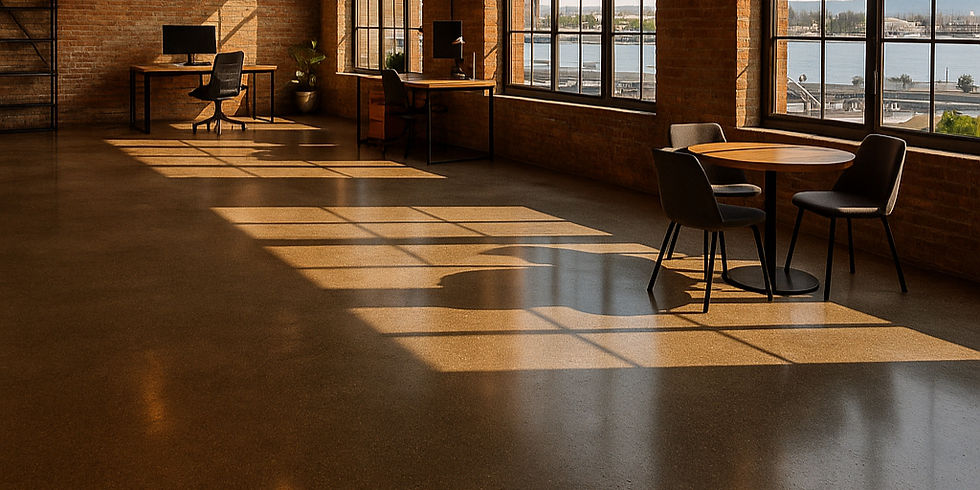
What Actually Works in Different East Bay Sectors
Berkeley/Oakland Retail and Office Spaces
What we see: Full polished concrete (commercial or premium finish) when concrete's decent. High foot traffic benefits polished concrete. Modern aesthetic fits urban retail and professional offices without forcing it. Tech offices and creative agencies love that industrial-sophisticated look.
What works: Polished concrete (Commercial or Premium finish depending on brand positioning)
What doesn't: Coating good concrete just because you want specific colors - you're covering up natural character and adding maintenance schedules unnecessarily.
Fruitvale/Oakland Restaurant District
What we see: Coating systems with cove base. Health department requires it. Every commercial kitchen, every restaurant back-of-house.
What works: Epoxy base with urethane topcoat, proper cove base installation
What doesn't: Trying to make polished concrete work in commercial kitchens - inspectors will fail you.
Fremont/880 Corridor Warehouses and Distribution
What we see: Mostly prep & seal or light industrial polish for standard operations. Full coating systems when there's chemical exposure, heavy spill risk, or need for that complete protective barrier.
What works: Match the system to actual operations - don't oversell premium finishes for basic storage
What doesn't: Full premium polish in standard warehouses - operational overkill that doesn't deliver ROI
East Bay Manufacturing Facilities
What we see: Split decision based on operations. Chemical processes get coating systems. Assembly operations often get prep & seal or light polish. Show floor/office areas might get full commercial polish.
What works: Different systems for different zones based on what actually happens there
What doesn't: One-size-fits-all thinking - a clean assembly area needs different flooring than a chemical processing zone.
East Oakland Auto and Industrial
What we see: Coating systems dominate. Oil resistance, chemical exposure, heavy equipment - these operations need engineered barriers.
What works: 100% solids epoxy or cementitious urethane depending on abuse levels
What doesn't: Polishing floors that will be constantly exposed to oils and chemicals - you're fighting against the floor's capabilities.
The Combination Strategy Most Contractors Won't Mention
Here's what actually works for many East Bay businesses: use different systems in the same facility based on what each zone actually needs.
Polish your customer-facing areas: Showrooms, offices, retail space - anywhere aesthetics matter and operations are light. Go commercial or premium finish here.
Light polish or prep & seal for functional areas: Warehouse zones, storage areas, back-of-house spaces that need durability without premium aesthetics.
Coat your high-performance areas: Kitchens, manufacturing floors, chemical-exposed spaces - anywhere performance requirements dictate engineered systems.
We've done this in multiple East Bay facilities:
Breweries: polished taproom (commercial finish), light polish or prep & seal storage, coated production floor
Restaurants: polished dining area (premium finish), coated kitchen
Manufacturing: polished office/showroom (commercial finish), prep & seal warehouse, coated production floor
Distribution centers: light polish main floor, coated loading dock zones
It costs more upfront because you're implementing multiple systems. But you're getting the right tool for each application instead of compromising on either or overselling premium finishes where they don't deliver value. Sometimes spending money strategically is actually the smart operational decision.
The Cost Reality for East Bay Businesses
Most business owners ask "which costs less?"
Wrong question.
The right question: "Which delivers what my operation needs without becoming an ongoing problem?"
Upfront Investment Ranges
Prep & Seal:
Most economical option
Functional durability for light to moderate use
May need resealing every few years depending on traffic
Polished Concrete:
Industrial finish (800 grit): Lower cost entry to mechanical polishing
Commercial finish (1500 grit): Mid-range cost, high-gloss professional look
Premium finish (3000 grit): Higher initial investment, maximum performance
Coating Systems:
Basic solid color: Comparable to commercial polish initially
Broadcast systems: Mid-range, adds slip resistance and texture
Specialized coatings: Higher cost, engineered for specific performance
Long-Term Economics
Prep & seal: Most economical upfront. May need resealing every few years depending on traffic and use. Good functional option for warehouses and spaces where premium aesthetics aren't required.
Polished concrete: Lifetime floor. Once mechanically densified, it stays polished. Maintenance is straightforward - keep it clean, maybe refinish high-traffic areas every few years in intense retail or every few decades in light-traffic spaces. The floor doesn't un-polish itself. Whether you're there 3 years or 30 years, the floor is handled.
Coating systems: Provide complete barrier between operations and concrete. Easy cleanup because nothing penetrates the seal. Recoating timelines vary wildly - could be 5 years in the most abusive manufacturing environments, could be 30 years in light-use office space. But in spaces requiring chemical resistance, seamless waterproofing, or slip resistance that polished concrete can't provide, coatings aren't just an option - they're the only rational choice.
The cost comparison isn't about dollars per square foot. It's about getting flooring that does what your East Bay business actually needs it to do without creating operational problems.
What Actually Doesn't Work: Common Mistakes
Polishing floors that need coating systems:
Commercial kitchens (health code fail)
Chemical manufacturing (inadequate protection)
Heavy wet environments (slip hazard)
Coating floors that should be polished:
High-traffic retail with no chemical exposure (covering up natural character and adding recoating timelines)
Office spaces with good concrete and no special requirements (unnecessary maintenance schedules)
Overselling premium finishes:
Full premium polish in standard warehouses (operational overkill)
Commercial-grade systems where prep & seal would suffice (wasting budget)
Choosing based on aesthetics alone:
"I like the look of polished concrete" → doesn't matter if your operations require seamless coated surface
"I want specific colors" → doesn't override operational requirements
Ignoring operational reality:
"My competitor has polished concrete" → your competitor might have different operations or different zones
"I read online that epoxy is better" → better for what operations?

Decision Matrix: What Actually Works for Your East Bay Business
Choose Full Polished Concrete When:
✓ High foot traffic retail or office spaces
✓ Customer-facing showrooms and commercial areas
✓ Long-term facility commitment (10+ years)
✓ Aesthetic matters and you want natural concrete character
✓ LEED/sustainability goals matter
✓ Operations don't involve heavy chemicals, constant water, or extreme impact
Choose Prep & Seal or Light Polish When:
✓ Warehouse storage and distribution (standard operations)
✓ Back-of-house functional spaces
✓ Budget-conscious projects with good concrete
✓ Light to moderate use without special requirements
✓ Temporary or short-term facilities
Choose Coating Systems When:
✓ Health department requires seamless surfaces (food service)
✓ Chemical exposure is regular occurrence
✓ Wet environments require slip resistance
✓ Heavy impact would damage polished concrete
✓ Need specific colors or safety zone marking
✓ Rapid installation timeline required (polyaspartic)
✓ Operations demand engineered performance characteristics
✓ Warehouse operations with heavy spills, oils, or cleanup requirements
Use Multiple Systems When:
✓ Different zones have different operational requirements
✓ Customer-facing areas need premium aesthetics
✓ Back-of-house areas need functional durability
✓ Production zones need chemical resistance
✓ Budget allows for strategic deployment of right systems in right places
The Bottom Line for East Bay Businesses
The flooring that "works" is the one that handles your actual operations without becoming a recurring problem you're constantly managing.
Full polished concrete works brilliantly for high-traffic retail and office spaces with good concrete, no special chemical requirements, and where aesthetics contribute to brand perception. It's a lifetime floor that improves with use.
Prep & seal or light polish works for warehouses, distribution centers, and functional spaces that need durability without premium aesthetics. Economical and effective for standard operations.
Coating systems work brilliantly for operations with chemical exposure, wet environments, health code requirements, or need for engineered performance characteristics. They're protective barriers designed for specific operational demands.
None is universally "better." The contractor who tells you otherwise is either incompetent or dishonest. The contractor who tries to sell you premium finishes for standard warehouse operations is wasting your money.
C*Rock Finishing - Your East Bay Concrete Experts
C*Rock Finishing has been the Bay Area's trusted concrete finishing contractor since 2014, maintaining a 98.7% on-time and on-budget delivery rate. Specializing in polished concrete, prep & seal, and coating systems, we serve commercial and industrial clients throughout the East Bay,
Oakland, Fremont, Berkeley, San Francisco, San Jose, and beyond.
We're not here to sell you what's easiest for us to install or what generates the highest margin. We're here to match the right flooring system to your actual operational needs - even if that means recommending the more economical option or telling you that premium finishes don't make sense for your warehouse.
Ready to figure out which flooring system actually works for your East Bay business? Contact us at (510) 214-6862 for an operational assessment and project-specific recommendation, or visit www.crockfinish.com/polished-concrete-flooring and www.crockfinish.com/epoxy-flooring to learn more about each system.
We help East Bay businesses choose flooring based on what actually works - not what sells.


Comments